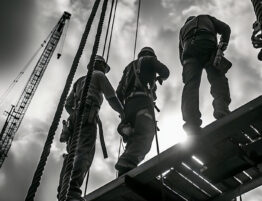
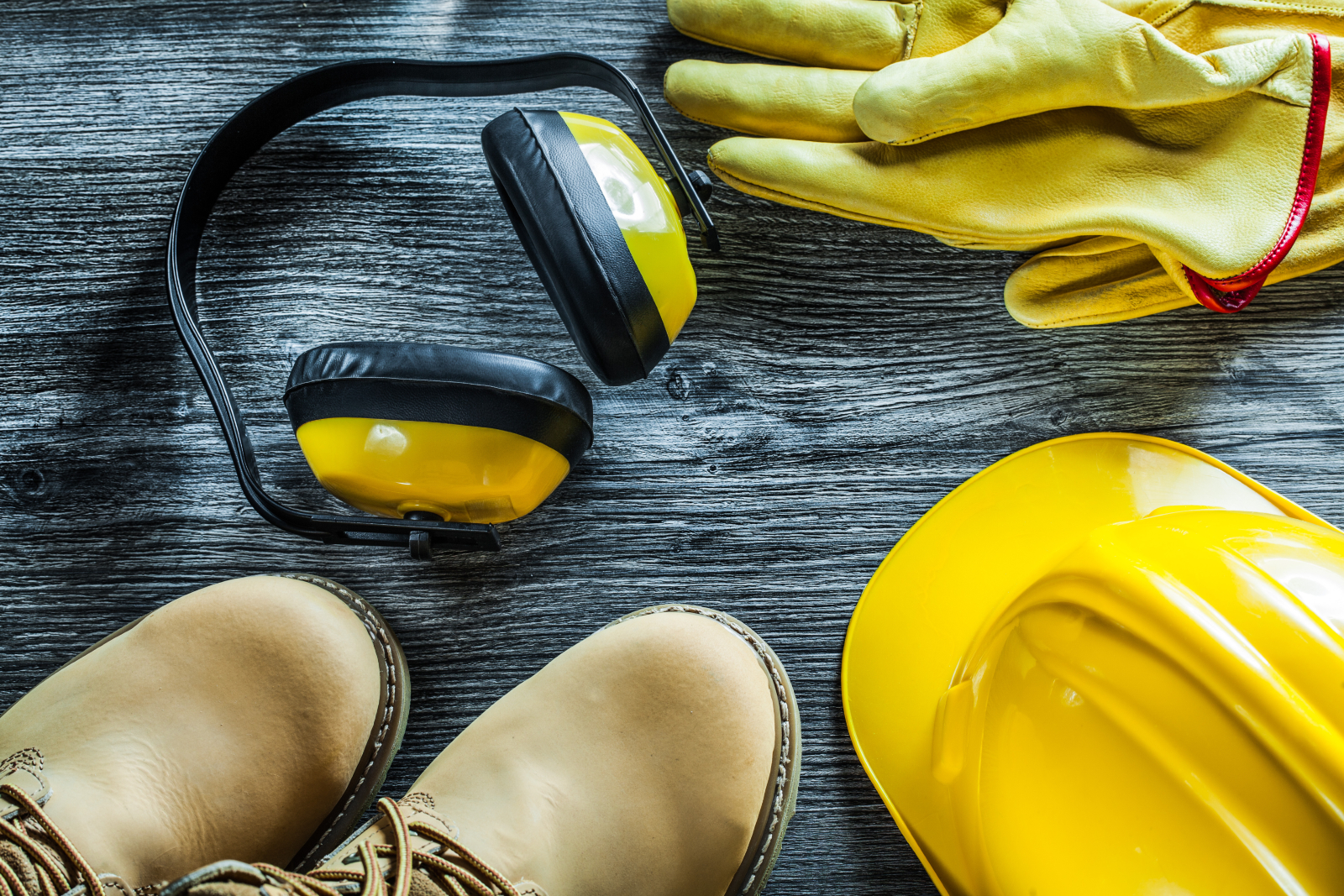
Personal protective equipment, or PPE, remains one of the most visible and recognisable elements of construction site safety. Hard hats, high-visibility clothing, safety glasses and protective footwear are all part of everyday working life on site.
But while PPE may feel routine, it should never be taken for granted. It is often described as the last line of defence – the final protective layer when other control measures cannot fully eliminate safety risks. Used correctly, PPE helps prevent serious injury; using it incorrectly or while damaged can give a false sense of security.
In this week’s Focus on Safety feature, we look at why PPE is so important, when it is required, and how to ensure it is properly fitted, maintained and inspected.
Why PPE matters on site
The hierarchy of control in UK health and safety law makes it clear that risks should first be eliminated, reduced or controlled through design, planning and safe systems of work. PPE comes into play when hazards cannot be fully removed.
Whether it is falling objects, flying debris, excessive noise, sharp materials or hazardous substances, construction sites present a wide range of risks that can result in serious injury or even death. However, real-life investigations repeatedly show that injuries are often worsened – or could have been prevented entirely – by the absence or misuse of PPE. A cracked hard hat, missing eye protection or worn-out safety boots can turn a near miss into something far more serious.
The essentials – what PPE covers
On a construction site, PPE typically protects five key areas of the body:
- Head – Hard hats protect against falling or striking objects and electrical hazards.
- Eyes and face – Safety glasses, goggles and face shields protect against dust, debris, splashes and impact.
- Hearing – Ear defenders and earplugs reduce exposure to harmful noise levels.
- Hands – Gloves protect against cuts, abrasions, chemicals, heat and vibration.
- Feet – Steel or composite toe boots protect against impact, puncture and slipping hazards.
Selecting the correct PPE for the task is essential. Equipment must be suitable for the hazard, fit the individual properly and allow the task to be conducted safely without restricting movement.
When and where PPE is required
PPE requirements should be clearly identified through site-specific risk assessments and method statements. Certain items, such as hard hats and safety boots, may be mandatory across the entire site, while others will depend on the nature of the task.
Training is equally important. Workers must understand not only when PPE is required, but why it is necessary and how it should be worn. Without this knowledge, equipment that is uncomfortable, poorly fitted or incompatible with other gear is more likely to be removed, increasing risk.
The dangers of damaged PPE
One of the most overlooked aspects of PPE safety is condition. Damaged PPE does not provide proper protection, even if it appears to be in place. Examples include:
- Hard hats with cracks, dents or degraded suspension systems (the internal framework of a helmet which absorbs impact energy and leaves a space between the shell and the head).
- Safety glasses that are scratched, reducing visibility
- Ear defenders with worn seals
- Gloves with tears or thinning material
- Boots with worn soles or compromised toe protection
Using damaged PPE can be more dangerous than not wearing it at all, as it can create a false belief that adequate protection is in place.
How to carry out a simple PPE inspection
A quick PPE inspection should be part of every working day. This does not need to be complicated, but it does need to be consistent. A basic inspection exercise can involve:
- A visual check for cracks, fraying, tears or visible damage
- A fit check to ensure straps, fastenings and adjustments are secure and comfortable
- A compatibility check to ensure items work together – for example, that ear defenders fit correctly with a hard hat and do not compromise protection
- Confirmation that PPE is appropriate for the specific task being undertaken
Supervisors can reinforce this through toolbox talks and by modelling good practice. Encouraging workers to challenge and replace defective PPE helps embed a stronger safety culture across site.
Final thoughts
PPE may be the last line of defence, but it is not the least important. Selecting the right equipment, ensuring it fits properly, maintaining it in good condition and conducting regular inspections all contribute to safer outcomes on site.
Ultimately, PPE is most effective when it is supported by a strong safety culture – one where people take responsibility for their own protection and look out for their colleagues.
If you have any practical tips for maintaining or inspecting PPE on site, we would welcome your thoughts. Join the conversation and share your views with us on our Facebook or LinkedIn pages.
11.03.2026
Feature image: Freepik