By this point in January, plenty of people have realised their New Year’s resolutions haven’t quite gone to plan. In fact, the second Friday of January is often dubbed ‘Quitter’s Day’ – when many people have already admitted defeat on their goals.
But even if you didn’t set a resolution, January still brings a natural pause for reflection – a chance to take stock and think about where you’re heading, including in your career. If that sounds familiar, construction could be worth a closer look. It’s long been seen as a solid, dependable choice, but it’s also evolving fast – with more high-tech roles than many people realise. Read this week’s blog to explore a few of those future-facing careers in construction.
More than bricks and mortar
Construction has always adapted to change, but the pace of evolution today is faster than ever. Digital tools, automation and environmental targets are reshaping how projects are planned, delivered and maintained. As a result, the industry is opening its doors to people with skills in technology, data, engineering and innovation.
For those who enjoy problem-solving, working with cutting-edge tools or being part of a sector that’s building for the long term, construction now offers a wide range of roles that sit at the intersection of technology and the built environment.
Here are four examples that show just how diverse modern construction careers have become.
1. Drone pilots and surveying specialists
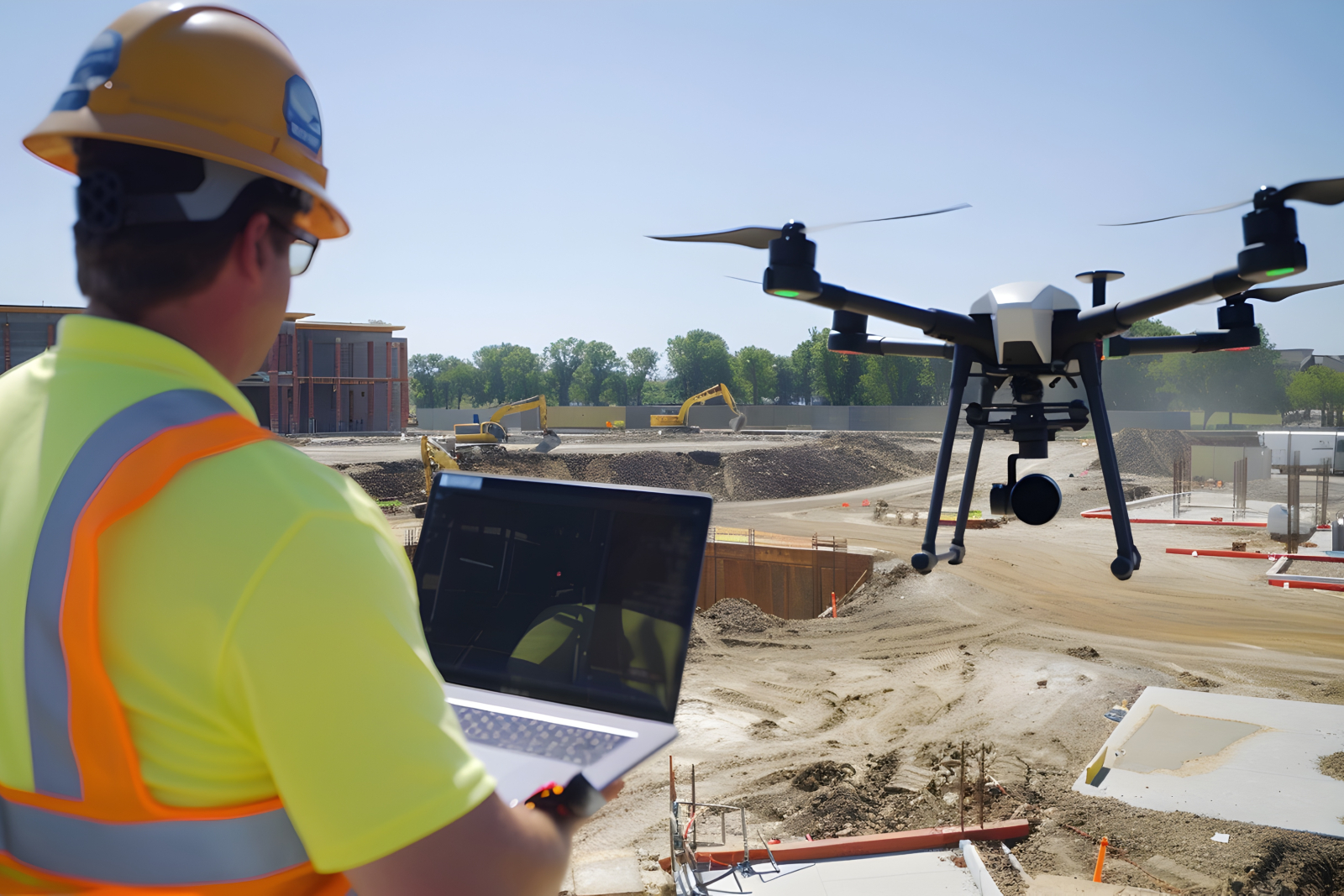
Drones are rapidly changing how construction sites are surveyed, inspected and monitored. Drone pilots in construction use unmanned aerial vehicles to capture high-resolution images, videos and data that help teams understand site conditions without the need for time-consuming or risky manual inspections.
These professionals support everything from topographical surveys and progress tracking to safety checks and asset inspections. The role suits people who are comfortable with technology, enjoy working outdoors and have an eye for detail. Training typically combines aviation regulations, software skills and an understanding of construction environments.
2. Robotics engineers and automation specialists
Automation is becoming increasingly important on construction sites, particularly for repetitive, complex or hazardous tasks. Robotics engineers help design, maintain and operate automated systems that can improve productivity, accuracy and safety.
This might include robotic bricklaying systems, automated plant equipment or machinery used in off-site manufacturing facilities. These roles are ideal for people with a background or interest in engineering, coding or mechanical systems, who enjoy solving technical challenges and working at the forefront of innovation.
3. Digital engineers and sustainability consultants
As the industry works towards lower-carbon, more energy-efficient buildings, digital engineers and sustainability consultants are starting to play a crucial role.
Digital engineers use tools such as Building Information Modelling (BIM) and data analytics to plan, coordinate and optimise projects before work even begins on site. Sustainability consultants focus on reducing environmental impact, advising on materials, energy use, compliance and long-term building performance. These roles suit people who enjoy data-driven decision-making, systems thinking and contributing to greener ways of building.
4. 3D printing and off-site manufacturing specialists
3D printing is gaining traction within construction, particularly in off-site manufacturing environments. Specialists in this area work with advanced printing technologies to create building components, structural elements or bespoke parts in controlled factory settings.
By producing components off-site, construction projects can reduce waste, improve quality and speed up on-site assembly. This role appeals to people who are interested in digital manufacturing, materials science and design technology, and who enjoy blending creativity with precision engineering.
Building the future with technological innovation
As construction continues to evolve, it’s no longer defined solely by hard hats and hand tools. Today, it’s a dynamic, technology-driven industry offering a wide range of future-facing careers. From drones and robotics to digital design and sustainable innovation, there are growing opportunities for people who want to combine technical skills with the satisfaction of creating real-world impact.
The industry needs forward-thinking people ready to help shape the built environment of tomorrow. If you’d like to explore more construction career pathways, the Go Construct website is a great place to start, with clear information on roles, training routes and progression across the industry.
13.01.2026
Feature image: Magnific