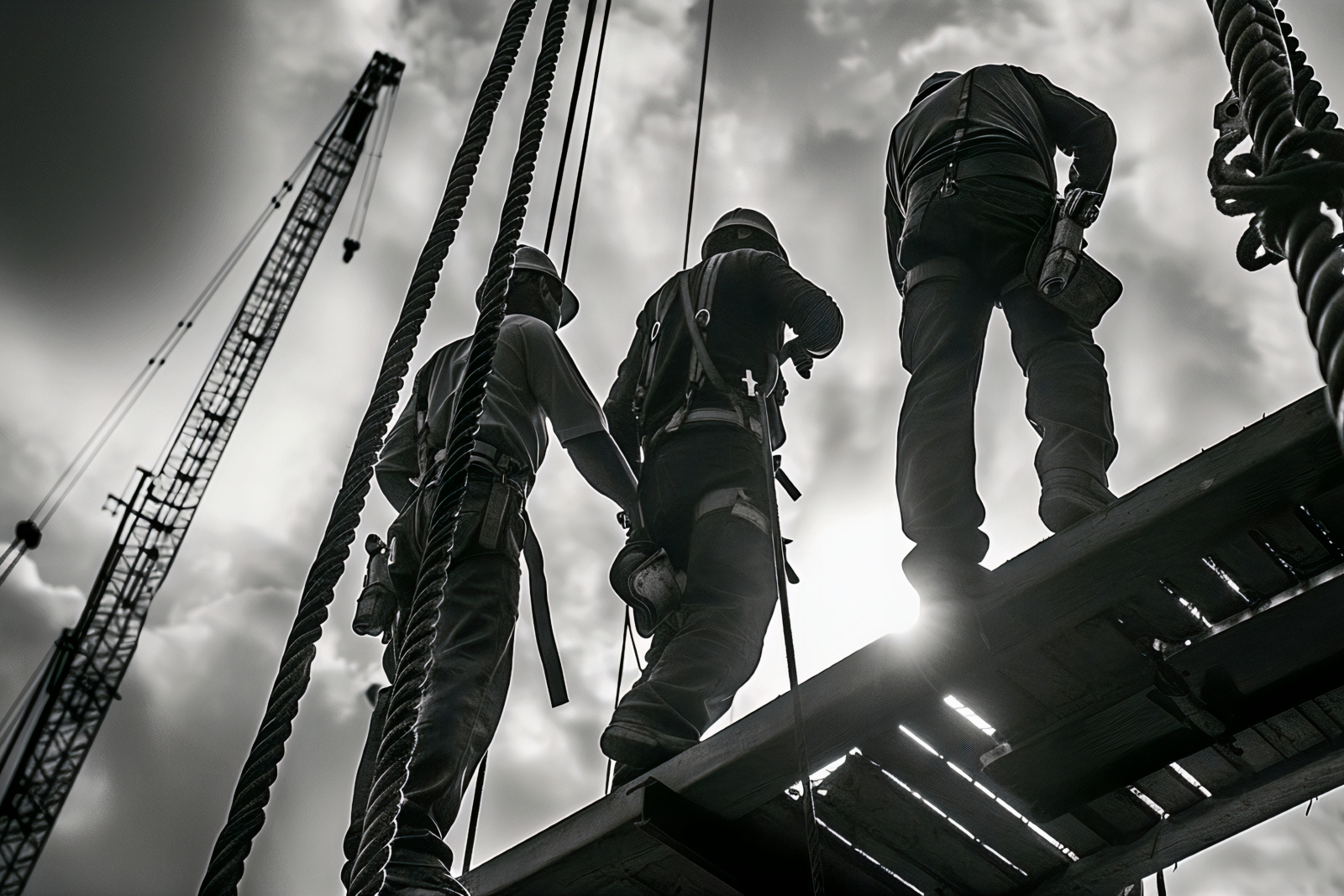
In the UK, falls from height are consistently one of the leading causes of workplace fatalities, particularly within the construction sector. This makes effective fall protection an essential part of any safe working environment. Understanding what fall protection involves and how to implement it properly helps keep workers safe and ensures sites remain compliant, efficient and productive for everyone involved.
Keep reading this week’s blog to learn more about why fall protection matters, the hierarchy of protection measures that should be deployed and how to ensure equipment such as personal fall arrest systems are used correctly on site.
Why fall protection matters
Work at height is defined by the Health and Safety Executive (HSE) as any place where a fall could cause personal injury. This includes obvious situations such as working on roofs or scaffolding, but also tasks such as working on mezzanine levels or around unprotected pits or excavations. The legal framework in the UK – primarily the Work at Height Regulations 2005 – requires those planning and supervising work to take all practicable steps to avoid work at height where possible and, where that is not possible, to assess risks, provide appropriate fall protection and ensure workers are competent and trained to use it effectively.
Falls from height remain a leading cause of death and serious injury in construction. Without adequate protection systems in place, a simple slip or loss of balance can have life-changing consequences for individuals, their families and their colleagues. Beyond the human cost, such incidents can also lead to project delays, increased insurance premiums and regulatory action, all of which impact the wider business.
In almost every recorded case where workers have suffered injuries or worse as a result of a fall, those outcomes could have been prevented if a properly installed guardrail, net system or harness had been used.
Types of fall protection systems
Effective fall protection relies on a hierarchy of controls that prioritises collective rather than individual measures wherever possible. Common fall protection systems used on construction sites include:
- Guardrail systems – These provide a physical barrier around edges such as roof perimeters, open floors or mezzanines. They are one of the most effective collective protection measures because they do not rely on individual action and help prevent falls before they occur.
- Safety nets – These are installed beneath work areas to catch people or objects in the event of a fall. They must be positioned close to the working level and inspected regularly by a competent person to ensure they remain fit for purpose. Nets are particularly useful in areas where other collective measures are impractical.
- Personal fall arrest systems – When collective measures alone are insufficient, personal fall arrest systems (PFAS) are used to protect individuals. These typically include a full-body harness, a secure anchor point and a connecting lanyard or lifeline. PFAS are designed to stop a fall once it happens and limit the forces on the worker’s body, minimising the risk of serious injury.
Inspecting and using personal fall arrest systems
A key part of effective fall protection is ensuring that personal fall arrest systems are both properly inspected and properly worn.
Before each use, workers should carry out a visual and physical check of their harness, looking for signs of wear, fraying, damage or degraded material. Harnesses with visible defects must be taken out of service immediately. More formal inspections should be carried out periodically by a competent person, with records kept as part of the site safety regime.
When wearing a harness, it must be fitted correctly – snug but comfortable – with all straps and buckles secure and adjusted to the individual user. The attachment point (commonly a dorsal D-ring on the back of the harness) must be connected to an appropriate anchor point that has been assessed as capable of supporting the required load. Ensuring correct use of a PFAS not only protects the wearer in the event of a fall, it also reinforces a culture of safety awareness and competence on site.
Final thoughts
Fall protection is not just a legal requirement. It is a fundamental part of caring for the people who make construction projects happen on site. Whether through guardrails that prevent a fall, safety nets that catch a slip or personal fall arrest systems that protect a worker in a moment of crisis, the right measures save lives and keep work progressing safely.
Following the hierarchy of controls, planning work with fall hazards in mind, training teams on correct use of equipment and maintaining rigorous inspection routines all contribute to a safer site environment.
If you have any tips or experiences with effective fall protection on site, we would love to hear from you. Join the conversation and share your thoughts with us on our Facebook or LinkedIn pages.
17.02.2026
Feature image: Magnific