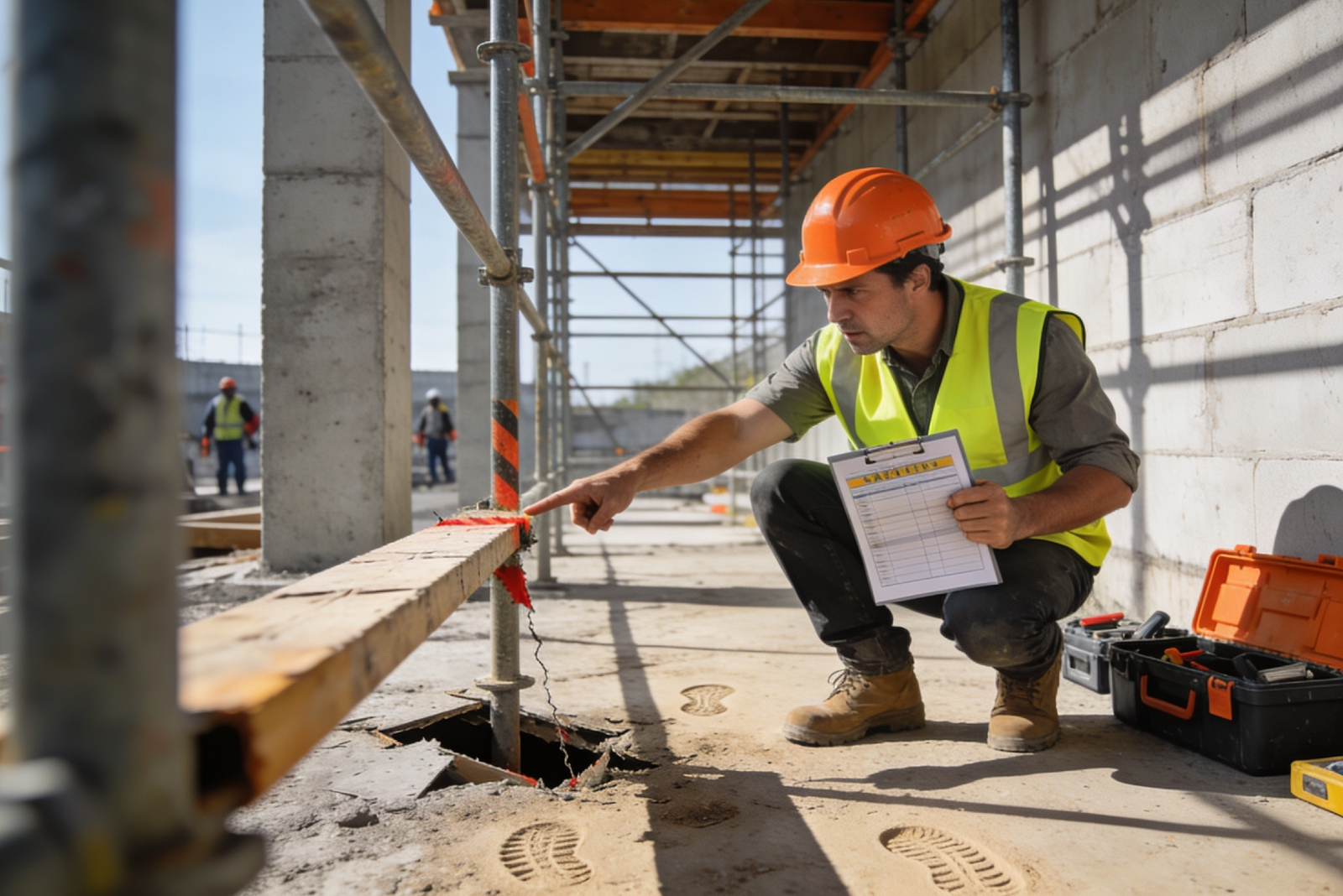
In construction, not every safety incident results in injury or damage. Sometimes, something goes wrong – but no one gets hurt. It is easy to see these moments as ‘lucky escapes’ and move on.
However, these incidents, known as near misses, are often the most important warnings a site will ever get. Whether it is a tool falling from height but missing someone or a vehicle reversing too close to a pedestrian, near misses highlight where things are starting to go wrong. Left unaddressed, the next time may not end so well. Keep reading this week’s blog to understand what near misses are and why recording them is essential for improving safety.
What is a near miss?
A near miss is an unplanned event that did not result in injury, damage or loss – but had the potential to do so. In construction, these happen more often than people realise, with the difference between a near miss and a serious accident often coming down to timing, positioning or pure luck.
That is why near misses should never be dismissed. Rather than moments where ‘nothing happened’, they are early warning signs that something within the working environment, process or behaviour needs attention.
Why near misses matter
Near misses play a crucial role in improving safety because they show where risks are already present.
Every serious accident is typically preceded by many smaller incidents and near misses. These events provide an opportunity to identify hazards, understand what went wrong and put controls in place before harm occurs.
As the Health and Safety Executive highlights, near misses can offer valuable insight into how well risks are being managed and should not be ignored or treated lightly. Put simply, near misses allow organisations to move from a reactive approach – responding after an incident – to a proactive one focused on prevention.
The importance of reporting near misses
One of the biggest challenges with near misses is that they are often under-reported.
Because no one was injured, people may not see the value in reporting what happened. In some cases, there may also be concerns about blame or unnecessary paperwork.
However, failing to record near misses means losing valuable information that could prevent future incidents. Recording near misses helps to:
- Identify patterns and recurring issues across sites or projects
- Highlight weaknesses in processes, planning or controls
- Improve risk assessments and safety procedures
- Share lessons learned with teams to prevent repeat incidents
Over time, this information builds a clearer picture of where risks exist and where improvements are needed.
Near miss data is often described as a leading indicator of safety performance – it shows where problems are developing before accidents happen.
Creating a culture where people report
For near miss reporting to be effective, it needs to be supported by the right culture. People must feel confident that reporting a near miss will lead to positive action, not blame. If workers think they will be criticised or ignored, reporting will quickly drop off.
Simple steps can make a big difference:
- Making reporting quick and easy
- Encouraging open communication on site and in the office
- Acknowledging and acting on reports
- Sharing outcomes so teams can see improvements being made
When near misses are taken seriously and acted upon, it reinforces the message that safety is a shared responsibility.
Turning near misses into learning
The real value of a near miss lies in what happens after it is reported as each incident is an opportunity to ask:
- What happened?
- Why did it happen?
- What could have happened?
- What needs to change to prevent it happening again?
By analysing near misses and acting on the findings, construction businesses can strengthen their systems, improve working practices and reduce the likelihood of future accidents. In many cases, the difference between a near miss and a serious incident is simply that something went right at the last moment. Relying on luck is not a safety strategy – learning is key.
Have you experienced or reported a near miss on site or in your role? What lessons were learned? We would love to hear your thoughts – join the conversation and share your experiences with us on our Facebook or LinkedIn pages.
28.04.2026
Feature image: Magnific