
The 31st United Nations Climate Change Conference (COP31) has just begun in Antalya, Türkiye, bringing together world leaders, businesses and organisations to agree the next steps in tackling climate change.
This year’s conference places particular emphasis on turning climate commitments into practical solutions that make a real-world difference. So, over the next two weeks, we’re likely to hear plenty about the UN’s Global Climate Action Agenda, which brings together governments, businesses and communities to accelerate progress on climate action.
In this week’s blog, we explain each of the six priorities and explore how they relate to the construction industry.
Six areas of climate action – and their relevance to construction

Speaking at the opening of COP31, UN Climate Change Executive Secretary Simon Stiell called for greater emphasis on practical solutions, stating that “COP31 must supercharge solutions.”
The message is clear: setting climate targets is important, but turning those ambitions into meaningful action is what really matters.
The Global Climate Action Agenda provides a framework for this work, with implications for businesses and industries around the world. Rather than focusing solely on reducing carbon emissions, the Agenda covers six interconnected themes, addressing everything from biodiversity and resilient infrastructure to skills, technology and social development.
1. Transitioning energy, industry and transport
This theme focuses on accelerating the shift towards renewable energy, greater energy efficiency and lower-emission technologies, while reducing dependence on fossil fuels.
For construction, this is perhaps the most familiar aspect of climate action. It includes choosing lower-carbon building materials, improving the energy efficiency of buildings, introducing electric plant and vehicles, and reducing emissions associated with construction sites and supply chains.
These are all areas where careful and considerate purchasing decisions, design choices and working practices can make a difference.
2. Stewarding forests, oceans and biodiversity
Protecting and restoring natural environments is another important part of the Agenda, with a focus on forests, oceans, habitats and ecosystems.
Construction businesses can contribute through responsible timber sourcing, protecting habitats during development and incorporating green infrastructure, such as green roofs, landscaping and tree planting.
In England, Biodiversity Net Gain (BNG) requirements have also encouraged developers to consider how projects can improve biodiversity. Although the Government has recently announced exemptions for smaller residential brownfield developments, the wider principle remains important: developers should consider its impact on the natural environment and opportunities to protect or enhance it.
3. Transforming agriculture and food systems
The third theme focuses on making agriculture and food production more sustainable and resilient to climate change, helping protect food supplies and the communities that depend on them.
Although the connection with construction may be less obvious, the industry still has a role to play. Responsible land use, protecting soil quality during construction and minimising disruption to agricultural environments can all help. Projects may also create opportunities to incorporate community growing spaces or other features that support local food production.
4. Building resilience for cities, infrastructure and water
This is an area where construction can make a particularly significant contribution.
As extreme weather becomes more frequent, buildings and infrastructure need to be designed and constructed to withstand challenges such as flooding, prolonged heat, heavy rainfall and water shortages.
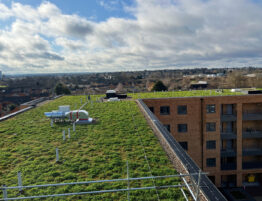
Practical solutions include sustainable drainage systems, flood-resistant design, effective water management and heat-resilient buildings. Roofing solutions can also play a part, with blue roofs helping to manage rainwater runoff and green roofs supporting biodiversity while also helping to reduce urban heat.
This highlights an important distinction. Construction’s contribution to climate action isn’t just about reducing emissions. It’s also about helping communities adapt to the changes already happening.
5. Fostering human and social development
The fifth theme places people at the centre of climate action, focusing on health, education, wellbeing, equality and opportunities for communities.
For construction businesses, this connects with aspects of social value, including employment opportunities, apprenticeships, skills development, community engagement and creating healthier places to live and work.
Developing the skills needed for greener construction methods is particularly relevant, as is ensuring that the transition towards more sustainable practices benefits people and communities.
Climate action should deliver benefits not only for the environment, but also for those whose lives and livelihoods are affected by change.
6. Unleashing enablers and accelerators
The final theme looks at what is needed to make climate action happen faster and on a larger scale. This includes investment, innovation, technology, training and more effective policies and business practices.
For construction, relevant examples include sustainable procurement, digital technologies, modern methods of construction, workforce training and better measurement of environmental impacts.
These approaches can help businesses make more informed decisions, improve efficiency and identify opportunities to reduce their environmental footprint.
Importantly, this theme recognises that achieving sustainability goals requires more than good intentions. Businesses also need the knowledge, resources and systems to put them into practice.
Turning global ambitions into practical action
Although discussions about climate change often focus on net zero and carbon emissions, the Global Climate Action Agenda demonstrates that sustainability involves much more.
From protecting biodiversity and developing resilient buildings to supporting skills, communities and responsible business practices, construction has a role to play across all six themes.
Not every area will be equally relevant to every business, and making improvements will often involve balancing environmental ambitions with practical, technical and commercial considerations.
However, understanding these connections can help construction companies identify opportunities, respond to evolving client expectations and contribute to a more sustainable future.
What do you think?
Where could construction businesses make the biggest difference in tackling climate change? Share your thoughts by commenting Facebook or LinkedIn pages.
10.11.2026
Feature image: Magnific