
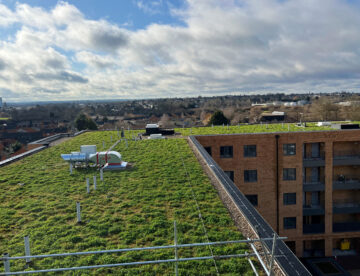
After another summer of unusually high temperatures in the UK, conversations about how our buildings respond to a changing climate are becoming increasingly difficult to ignore.
But while much of the focus around climate change in construction has understandably been on reducing carbon emissions and improving energy efficiency, there’s another question we need to consider: Will the buildings we’re constructing today still perform effectively in the climate they’ll experience 20, 30 or even 50 years from now?
That’s the question being raised by the National Federation of Roofing Contractors (NFRC), which is calling for climate resilience to become a standard consideration when roofs are designed, refurbished and maintained. Keep reading to find out more.
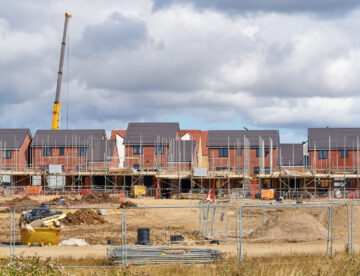
The Government has published its long-awaited new National Planning Policy Framework (NPPF), introducing another significant set of changes to England’s planning system.
There have already been plenty of headlines about a new ‘default yes’ for development around railway stations, greater support for housebuilding and plans to make the planning system simpler and more consistent. But what exactly is the NPPF – and what could the latest changes mean for housing development in England? Keep reading for a summary at some of the key things worth knowing.

After weeks of hot, dry weather, recent wildfires across the UK have provided a stark reminder of just how quickly fire can take hold. And while temperatures may be starting to fall, large parts of England remain affected by drought, leaving ground and vegetation exceptionally dry.
Construction sites always carry potential fire risks, but these conditions provide another reason to take a fresh look at how those risks are being managed. With much of the country still tinder dry, read on as we look at some of the most common causes of construction site fires and the practical steps that can help prevent them.

The first Making Tax Digital (MTD) quarterly update deadline – 7 August 2026 – is fast approaching and around 864,000 self-employed people, including many construction subcontractors, will need to submit their first digital update to HMRC.
Making Tax Digital represents one of the biggest changes to Self Assessment in recent years. If you’re affected, now is the time to understand what the changes mean and make sure you’re prepared. Read on to find out more about the new reporting requirements and some practical steps you can take before the deadline.

On a hot, dry summer’s day, it doesn’t take much for dust to become part of the job. A passing dumper, a quick cut through concrete or a few minutes of sweeping can send fine particles into the air. While it may seem little more than a nuisance, construction dust can pose serious risks to workers’ health and to those living and working nearby.
The good news is that dust doesn’t have to be such a problem. By understanding the risks and adopting the right control measures, contractors can protect their workforce, minimise disruption to neighbouring communities and maintain cleaner, safer sites throughout the summer months. Keep reading to discover why dust control matters and the practical steps every construction site can take.

There are moments in sport that remind us what great teamwork really looks like. Spain’s performance in Sunday’s World Cup final was one of them. They didn’t win through technical ability alone, but through the way they stayed true to their identity and held themselves together when it mattered most.
In many ways, their approach reflects what the strongest workplace teams do every day. They remain consistent, have clarity about their roles, work together as a connected team and stay composed under pressure. Read on as we explore four lessons every team can take from Spain’s World Cup triumph.

The government has recently set out proposals to support the development of a new generation of towns across England, marking one of the most ambitious approaches to housebuilding in decades.
While the headlines focus on housing numbers, the wider ambition is clear. These developments are intended to go beyond simply delivering homes, instead creating well-planned communities that benefit from the infrastructure, services and amenities needed to support long-term growth. Keep reading this week’s blog to understand what the new towns programme involves and what it could mean in practice.

Whether you are working on site or in an office-based role, the demands of the construction industry are constant. Deadlines are tight, programmes need to be met, quality standards must be maintained and safety is always a priority. With so many moving parts, the stakes are high – and that can create significant stress if not managed effectively.
Understanding the key pressure points is the first step in addressing work-related stress, particularly in fast-paced environments like construction. Keep reading to explore what these are and what they mean in practice.

Personal protective equipment, or PPE, remains one of the most visible and recognisable elements of construction site safety. Hard hats, high-visibility clothing, safety glasses and protective footwear are all part of everyday working life on site.
But while PPE may feel routine, it should never be taken for granted. It is often described as the last line of defence – the final protective layer when other control measures cannot fully eliminate safety risks. Used correctly, PPE helps prevent serious injury; using it incorrectly or while damaged can give a false sense of security.
In this week’s Focus on Safety feature, we look at why PPE is so important, when it is required, and how to ensure it is properly fitted, maintained and inspected.

When you think about construction hazards, you might picture scaffolding, power tools, or heavy machinery. Yet one of the most common (and often underestimated) risks is manual handling.
Every day, workers lift, carry, push and pull a variety of loads – from heavy materials to awkward tools. Done incorrectly, these tasks can lead to painful injuries that affect not just working life, but long-term health too. Keep reading for a reminder of the key DOs and DON’Ts around manual handling on site.