After another summer of unusually high temperatures in the UK, conversations about how our buildings respond to a changing climate are becoming increasingly difficult to ignore.
But while much of the focus around climate change in construction has understandably been on reducing carbon emissions and improving energy efficiency, there’s another question we need to consider: Will the buildings we’re constructing today still perform effectively in the climate they’ll experience 20, 30 or even 50 years from now?
That’s the question being raised by the National Federation of Roofing Contractors (NFRC), which is calling for climate resilience to become a standard consideration when roofs are designed, refurbished and maintained. Keep reading to find out more.
Why is NFRC raising this now?
Five years ago, the NFRC Charitable Trust commissioned the University of Southampton to investigate how roofing could help the UK’s built environment adapt to climate change.
Its Future (P)roof research identified overheating and flooding as two of the greatest climate-related risks facing UK buildings, while exploring how different roofing approaches could help address them.
Five years on, the NFRC believes those findings have become even more relevant.
By August 2026, parts of the UK had experienced their fourth heatwave of the year. Temperatures of 35°C or above had been recorded during May, June and July for the first time in the UK, while eight days had exceeded 34°C – more than in any previous year.
The concern is not simply how buildings cope with today’s weather. A roof installed or substantially refurbished in 2026 could still be in place in the 2050s, by which time the conditions it experiences may look quite different from those represented by historic weather records.
Climate adaptation alongside carbon reduction
Over recent years, the construction industry’s response to climate change has quite rightly included a strong focus on reducing energy consumption and carbon emissions.
The NFRC argues that adaptation now needs to sit alongside those efforts. A highly insulated, energy-efficient building, for example, can still be vulnerable to overheating. Equally, reducing the carbon associated with a roof doesn’t necessarily mean its drainage, waterproofing, rooflights or PV systems will be able to cope with future climatic conditions.
In other words, reducing the impact our buildings have on the climate is only part of the challenge. We also need to think about how those buildings will cope with the changing climate around them.
What role can roofs play?
Traditionally, the fundamental job of a roof has been relatively straightforward – protect the building and its occupants from the weather. That remains essential, but the NFRC argues that roof space increasingly has the potential to do much more.
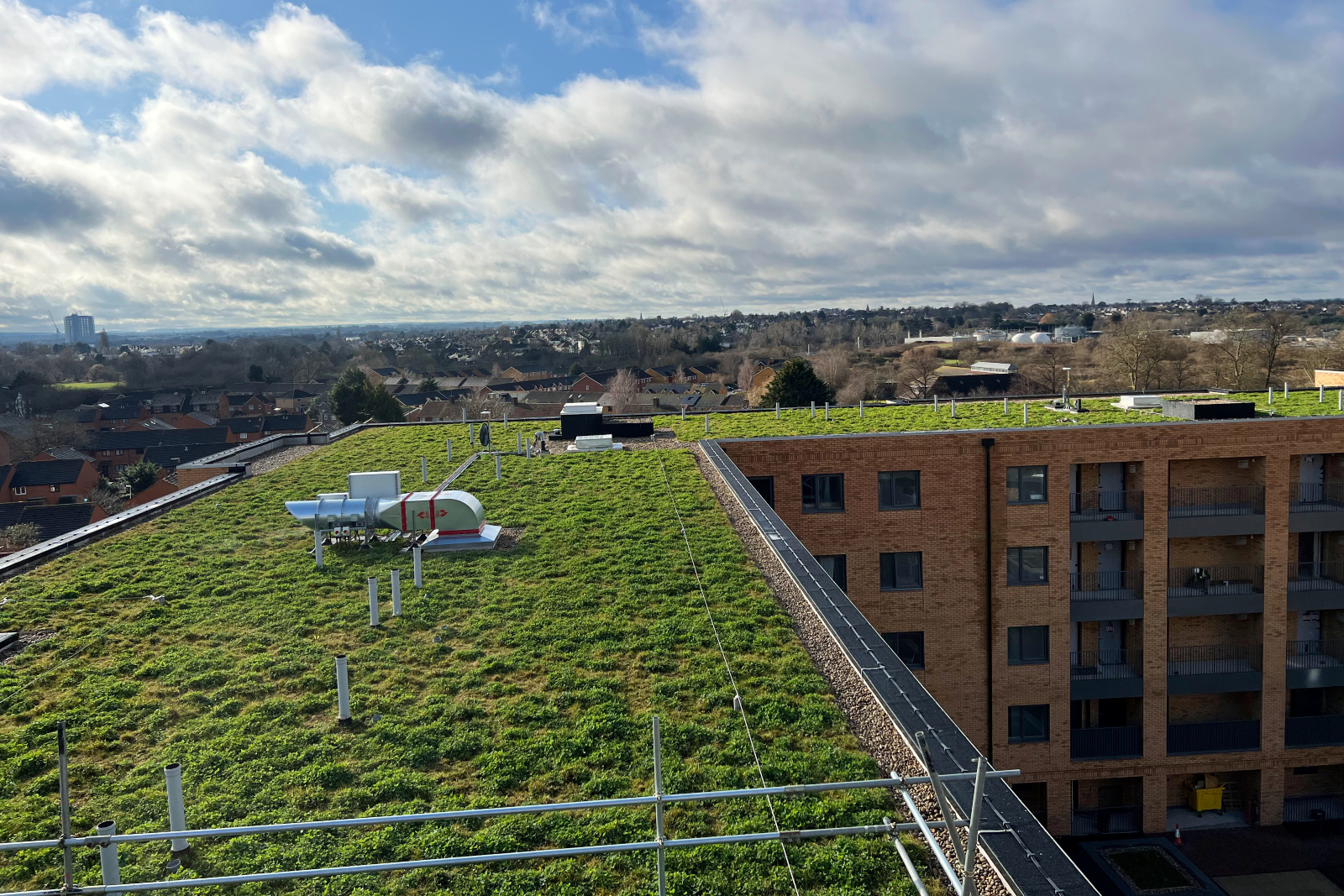
The original research considered conventional, cool, green and blue roofing technologies and found that different approaches could contribute to reducing overheating, managing stormwater and improving energy resilience. Green and blue roofs can help manage rainfall, reflective surfaces can reduce solar heat gain, vegetated systems can support biodiversity and roof space can also accommodate renewable energy technologies such as solar PV.
The 2021 research also found that during peak summer conditions, cool, green and blue roof configurations produced lower heat gains than conventional dark roofs.
Appropriate insulation, ventilation and the colour and reflectivity of roofing materials can therefore all contribute to reducing overheating risk.
Sometimes it’s about getting the basics right
One of the most useful messages in the new report is that climate resilience doesn’t mean every building needs an innovative or expensive roofing system. The appropriate solution will depend on factors including the building’s use, location, structure, fire performance, drainage strategy and maintenance requirements.
Getting the basics right – including good roof design, inspection and maintenance – remains fundamental. As rainfall patterns change, that means thinking carefully about adequate drainage capacity and falls, correctly positioned and maintained outlets, emergency overflows where required, gutters and drainage routes that can be inspected and cleared, and safe access for ongoing maintenance.
Drainage is particularly important when we consider the potential scale of future flood risk. The NFRC reports that 6.3 million properties in England are currently located in areas at risk of flooding from rivers, the sea or surface water, with that figure potentially increasing to around eight million by 2050.
What should the industry do?
The NFRC’s latest report calls for climate resilience to become embedded within normal roof and building design rather than being viewed as an optional sustainability enhancement. Among its recommendations, it says the industry should:
- Consider future climatic conditions where they could materially affect the performance of a building or roof.
- Think about overheating as well as winter performance, particularly for vulnerable buildings and accommodation immediately beneath roofs.
- Design drainage with future rainfall risk in mind, rather than relying solely on historic rainfall assumptions.
- Consider the wider potential of roof space, including cooling, rainwater attenuation, biodiversity and renewable energy generation where appropriate.
- Use refurbishment as an opportunity to improve resilience, whether through better thermal performance, drainage, overheating protection or provision for future technologies.
- Develop skills and competence alongside new technology, ensuring designers, manufacturers, contractors and maintenance teams can work effectively with increasingly multifunctional roofs.
- Give greater consideration to existing buildings, rather than focusing climate adaptation solely on new development.
This final point is particularly significant. Existing building stock will be with us for decades, and major roof refurbishment may provide one of relatively few opportunities during a building’s life to improve its resilience cost-effectively.
The original Future (P)roof research also highlighted the need for the roofing sector to invest in green skills, including ensuring apprenticeships keep pace with emerging technologies and upskilling existing workers as roofing becomes increasingly multifunctional.
At Sheriff Construction, our roofing teams are skilled and experienced in installing a range of specialist roofing systems including green, brown, biodiverse and blue roofing. Find out more about our services HERE.
Taking the long-term view
We can’t know exactly what weather a roof installed today will experience over the next few decades. But we can consider the reasonably foreseeable risks and make decisions now that could help buildings cope better with overheating, heavier rainfall and other changing conditions.
For the roofing industry, that means looking beyond whether a roof works for today’s climate and increasingly asking whether it will remain fit for purpose tomorrow.
Find out more by downloading NFRC’s Future (P)roof: Five Years On report HERE, or look at a summary of the original 2021 University of Southampton research HERE.
What do you think?
Do you believe we’re paying enough attention to climate resilience and adaptation when buildings are designed and refurbished? We’d love to hear your thoughts. Join the conversation by commenting on our Facebook or LinkedIn pages.
14.09.2026
Feature image: Sheriff Construction