
Stay connected:  
Open/Close Menu Sheriff Construction Sheriff Construction
Skip to content
  • HOME
  • ABOUT US
    • SOCIAL VALUE
      • Our People
      • Our Communities
      • Our Planet
      • Social Value Case Studies
      • Delivering Social Value in 2026-27
    • Sheriff’s 20th Anniversary Big Charity Challenge
    • How we demonstrate our impact
    • Testimonials
    • Work With Us
  • SERVICES
    • Flat roofing
      • Hot Melt/ Structural Waterproofing
      • IKO Permatec LI Hot Melt Systems
      • Single Ply Systems
      • Built up Felt Systems
      • Green and Biodiversity
      • Fibre Glass Flat Roofing System (GRP)
      • Cold Applied Liquid Roofing
      • Accessories
      • Flat roof Electronic Leak Testing (ESA Consultants Ltd)
      • Resin Bonding
    • Brickwork
    • Development
  • PORTFOLIO
  • QUALITY ASSURANCE
    • How we demonstrate our impact
  • SOCIAL VALUE
    • Our People
    • Our Communities
    • Our Planet
    • Social Value Case Studies
    • Delivering Social Value in 2026-27
  • NEWS
  • CONTACT US

The carrot and the stick…

  
6 April 2021

…or how to become a master of feedback!

Like many other work environments, construction involves several layers of supervisory and management roles, many of which are taken up by people who have worked their way up the ranks.

On the one hand, that’s a great example of how hard work and loyalty can be rewarded, but, on the other hand, it means that often people without any formal management or leadership training are having to manage and lead.

One of the trickiest aspects of managing other people is giving feedback – both praise and criticism. When such feedback is thoughtful, constructive and given to workers in the right way at the right time, it can make a big impact on their performance at work, help them make strides forward and lead to them adopting improved practices over the long-term.

If you’re struggling to achieve this, here are some tips:

1. Get the balance right

One of the most common mistakes managers make is to give only one kind of feedback – either only ever dolling out the praise (avoiding the stress of providing critical feedback) or always pointing out the negatives (and failing to give positive reinforcement for good work).

Both approaches are flawed.

If you avoid giving your team any negative feedback (let’s call it constructive criticism), then they will remain unaware of their weaknesses and miss out on opportunities to learn from mistakes.

If, however, you avoid giving any positive feedback, this can result in team members who lack confidence, have very little sense of whether they are progressing in their roles and largely feel disillusioned.

So, when giving feedback, think about whether you’re offering the proverbial carrot or the stick and whether there’s too much of one and not enough of the other. Strive to find a happy medium.

2. Tailor your approach

While it’s obvious that you need systems in place to monitor and review people’s work, another error that leaders make is using such systems to follow a one-size-fits-all approach to giving feedback.

The problem with that is everyone is different and will therefore respond differently to the way you carry out a review. If you have a criticism to make and want to see active improvement, for example, one worker may need a frank, direct approach (telling it as it is) whilst another might need the criticism given in balance with some words of encouragement. As their manager, you will only know this if you take some time to observe how your team interacts with each other. You will only be able to deliver the right balance if you keep your own approach flexible to individual needs, sensitivities and circumstances.

3. Be tactful

Tact is basically what allows people to tell the truth in the most considerate way possible. It’s a skill that not everyone is immediately able to master but using tact is absolutely key to making sure feedback is effective.

Think about the different ways you could deliver a piece of negative feedback to someone. Maybe you have a blunt but respectful conversation in private; or maybe you make an insulting comment in front of their peers. Which approach is going to actually help that worker make a change?

In this kind of situation, tact doesn’t only help induce positive outcomes for the person receiving the feedback. It also helps the manager or supervisor to build and strengthen their own reputation. People will come to see you as someone who can be trusted to give honest, credible feedback without any associated negative characteristics like aggressiveness.

4. Keep it timely

Although annual performance reviews have their purpose, they should never be the only means of feedback that a worker receives.

For feedback to be useful and actionable, it should be given while it is still fresh in everyone’s mind. Taking a quick moment to issue some praise will motivate a worker to maintain their good working habits while dealing with a more problematic issue through timely critical feedback means that issue can be addressed sooner rather than later.

Carry out regular reviews of staff, use them to have the difficult conversations if needs be, use them to discuss and give praise for progress, and use them to promote the next stage of someone’s learning and development.

5. Make it a two-way conversation

Feedback sessions are a great way for staff to become more aware of how they are performing and what they might do to improve. They also offer great opportunities for staff to become more engaged with the company they work with by having a time and space when they can share their own feelings, ideas or concerns. This makes it easier for the company to identify what career goals people may have and what training and learning resources might be worth investing in as well as allowing for greater innovation.

Summing up

Feedback in the workplace should always be about trying to bring out the best in your workforce. That requires managers and leaders to strike a balance between the good and the bad, tailor their approach to individuals, use tact to skilfully deliver the feedback, be timely and ensure its a two-way process. Through this well-devised approach, individuals can be supported to develop their careers, managers can be seen as highly respected advisers and, on the back of the inevitable improvements made, the company can thrive.

06.04.2021

Feature image: Freepik

  •  Like
  •  
  •  Share
  •  

RELATED STORIES

Four young people sat at a table, looking at a laptop with the suggestion they are having a discussion. 
12 October 2026

Construction’s skills gap: Could earlier exposure be part of the answer?

For many young people, the first time they seriously think about a career is when they’re on the brink of leaving school and trying to make important decisions about what to do next.

But could giving young people greater exposure to the world of work at an earlier age help them make more informed choices – while also helping industries such as construction address their long-term skills needs? As the Government makes plans to boost work experience and strengthen vocational education, keep reading to find out how these measures could help construction address its skills gap.

Image showing a construction site using the modular G decking system 
6 October 2026

Five issues shaping the UK construction industry this autumn

The construction industry never stands still. From housing delivery and skills shortages to building safety and infrastructure investment, the latest headlines highlight both the challenges and opportunities facing contractors, clients and communities across the UK.

As we move further into autumn, this week’s blog takes a quick look at five of the issues we’re watching closely – and why they matter for the wider industry.

Close up of a compass with a gold arrow pointing towards the word 'integrity'. 
30 September 2026

Doing business the right way: Introducing our Code of Ethics and Conduct

While Sheriff has grown considerably since the business was first established over two decades ago, some things haven’t changed. Trust, respect, keeping our promises and taking pride in the quality of our work have always been fundamental to the way we do business.

As a business grows, however, it becomes increasingly important to make sure the standards it was built on are clearly understood by everyone who represents it. That’s why we’ve recently introduced a new Code of Ethics and Conduct across Sheriff Group. Read on to find out more about why this matters and what we hope it will achieve.

An open laptop with a big padlock image on its screen plus network pathways all in shades of blue to represent cyber security 
23 September 2026

Cyber security: Why everyone in an SME has a role to play

Cyber-attacks might make the headlines when they affect major corporations, but cyber security isn’t only a big-business issue. Small and medium-sized enterprises (SMEs) are targets too – and the consequences can include operational disruption, financial loss and damage to important business relationships.

According to the Government’s latest Cyber Security Breaches Survey, 46% of small businesses and 65% of medium-sized businesses identified a cyber security breach or attack during the previous 12 months, with phishing by far the most commonly reported type.

Technology plays an important part in keeping businesses secure, but so do the everyday decisions made by the people using it. Read on to find out what SMEs and their employees should be looking out for – and some simple steps we can all take to reduce the risk.

Close up of a green roof with a city backdrop and cloudy sky 
14 September 2026

Climate-resilient roofs: Are we designing for tomorrow’s weather?

After another summer of unusually high temperatures in the UK, conversations about how our buildings respond to a changing climate are becoming increasingly difficult to ignore.

But while much of the focus around climate change in construction has understandably been on reducing carbon emissions and improving energy efficiency, there’s another question we need to consider: Will the buildings we’re constructing today still perform effectively in the climate they’ll experience 20, 30 or even 50 years from now?

That’s the question being raised by the National Federation of Roofing Contractors (NFRC), which is calling for climate resilience to become a standard consideration when roofs are designed, refurbished and maintained. Keep reading to find out more.

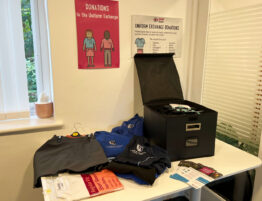
Collection box filled with school uniform items plus further uniform pieces on a table. Leaflets and posters about The Level Trust are also featured in the image. 
7 September 2026

Sheriff supporting local families through The Level Trust

Earlier this summer, we shared the news that Sheriff Construction was supporting local charity, The Level Trust, with a company donation and school uniform drive. Thanks to the generosity of our team, we’re delighted to have collected a fantastic selection of good-quality pre-loved and new school uniform, which we’ll be delivering to the charity this week.

The new school year may already be underway but, as any parent knows, children don’t stop growing once September arrives! We’re therefore confident these donations will soon be put to good use, helping local families with the ongoing cost of keeping their children properly equipped for school. Read on to find out more about The Level Trust and why Sheriff decided to support its work.

Table with a pile of books and a laptop with graphics on it relating to the brain and learning (e.g. a lightbulb). 
1 September 2026

Back to school isn’t just for the kids: What could you learn this autumn?

As children across the country head back to school this week, many adults will also be settling back into familiar routines after the summer. It might not mean buying a new pencil case or packing a school bag, but this time of year can still be a useful prompt to think about learning.

What could you improve? What new skill would make your job easier? Is there something you would like to understand better, or perhaps a role you would like to work towards in the future? Would a return to formal education help you achieve your goals, or could you get there through small, practical steps taken over time? Explore these ideas further by reading this week’s blog.

Housing being built on a construction site with partially completed houses in the forefront 
24 August 2026

The new NPPF: What could it mean for housebuilding?

The Government has published its long-awaited new National Planning Policy Framework (NPPF), introducing another significant set of changes to England’s planning system.

There have already been plenty of headlines about a new ‘default yes’ for development around railway stations, greater support for housebuilding and plans to make the planning system simpler and more consistent. But what exactly is the NPPF – and what could the latest changes mean for housing development in England? Keep reading for a summary at some of the key things worth knowing.

Sherrif

ABOUT

Sheriff Construction Ltd is one of the leading installers of specialist flat-roofing and waterproofing systems with our sister company, Sheriff Brickwork Ltd, specicalising in brickwork services.

Based in Luton, Bedfordshire, we work with many of the major building contractors, delivering a service that combines the highest quality of work, full compliance with industry regulations, strict adherence to schedule and excellent value for money.


SERVICES

  • COOKIES
  • PRIVACY POLICY
  • WORK WITH US

Sheriff Construction Ltd is a private company incorporated in England and Wales | Company no: 5524870 | Registered office: 61b Runfold Avenue, Luton LU3 2EJ | VAT no: 886 5670 65.


CONTACTS

Unit A1 Bramingham Business Park

Luton, Bedfordshire

LU3 4BU

Open: Mon to Sat 08:00 – 17:00

Tel: 01582 591908

Email: info@sheriffconstruction.co.uk

This website uses cookies to improve your experience. We'll assume you're ok with this, but you can opt-out if you wish. Cookie settingsACCEPT
Privacy & Cookies Policy

Privacy Overview

This website uses cookies to improve your experience while you navigate through the website. Out of these cookies, the cookies that are categorized as necessary are stored on your browser as they are essential for the working of basic functionalities of the website. We also use third-party cookies that help us analyze and understand how you use this website. These cookies will be stored in your browser only with your consent. You also have the option to opt-out of these cookies. But opting out of some of these cookies may have an effect on your browsing experience.
Necessary
Always Enabled
Necessary cookies are absolutely essential for the website to function properly. This category only includes cookies that ensures basic functionalities and security features of the website. These cookies do not store any personal information.
Non-necessary
Any cookies that may not be particularly necessary for the website to function and is used specifically to collect user personal data via analytics, ads, other embedded contents are termed as non-necessary cookies. It is mandatory to procure user consent prior to running these cookies on your website.
SAVE & ACCEPT