

(Mental Health Awareness Week 2022)
After two years of the pandemic, where there has been much less direct contact with friends, family, colleagues or even with essential healthcare professionals, many people are feeling a greater sense of loneliness, isolation and disconnection from our altered society.
Responding to this, the Mental Health Foundation have chosen ‘loneliness’ as the theme of this year’s Mental Health Awareness Week which starts today. With construction workers being exposed to many of the same stress points in life as everyone else, we’re using this week’s blog to talk about loneliness in detail and provide a few tips as to what can be done to manage or overcome this problem.
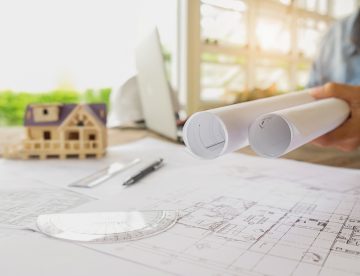
If you’re thinking of getting into property development, making significant structural alterations to your home or embarking on a ‘build your own home’ project, you’ll need to obtain planning permission before setting a single brick in place.
Whilst some projects may sail through to that sought-after ‘planning approved’ status, others will face a long, drawn-out and complicated process. This can be especially true with large-scale projects like new residential or commercial unit developments but even an extension to your house can sometimes take longer than you may think.
In this week’ blog, we’ve got a short guide to the steps involved in gaining planning permission and a few tips to follow along the way.

With soaring energy prices, interest rate rises, some huge hikes in the cost of materials and the continuation of labour shortages, many construction industry businesses could be in for some turbulent times this year.
In many cases, the cost pressures are made worse by the fact that contractors are both tied into existing work which was based on estimations set well before the current price rises and are also busy looking at how they can respond to invitations to tenders in ways that make the jobs viable within the current circumstances. In today’s blog, we’re taking a look at what construction businesses (and those who work within them) can do to face this challenge.
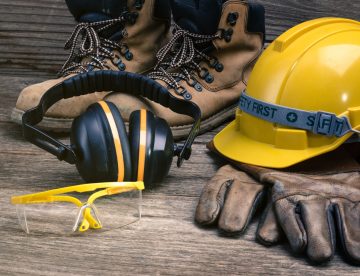
Over the past two years, the term PPE has become a big part of our everyday language, most often associated with the kind of face coverings we’ve all used during the coronavirus pandemic.
But, now that COVID seems to have moved out of the media spotlight, perhaps it’s a good time to remember that PPE (personal protective equipment) has always meant much more to the construction industry.
In this week’s blog, we’re looking at five key areas of the body that especially require protection (head, face/eyes, ears, hands and feet) and sharing some tips on how to select and properly use the necessary PPE.
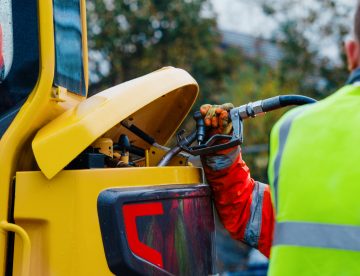
In new rules which came into place on Friday 1st April, the government has stated that construction firms in the UK can no longer use red (rebated) diesel for site plant and machinery.
Brought in as part of the search for policies which will help the country hit its net zero target by 2050, this would seem like a good thing. However, looking at the impact this is likely to have on construction companies in the current economic circumstances, many in the industry are calling this ‘the right policy at the wrong time’. Here’s what you need to know…

Statistics from the Health and Safety Executive show that there has been an average of 61,000 non-fatal injuries in construction each year and that during the period 2020-21 there were 39 fatal injuries. Although that might not seem a large number, it’s 4 times the rate for all industries!
Whilst falls from height and slips, trips and falls feature among the most common causes of injury, every year thousands of people are injured due to hazards arising from the equipment they’re using on site. Take a look at this week’s blog for six common dangers to watch out for.

In 2020-21, 1.7 million workers suffered from a work-related illness. For 800,000 of them, this was related to stress, depression or anxiety. Before COVID, it was estimated that mental health issues like these cost UK employers up to £45 billion a year. The pandemic has undoubtedly made things worse and, with mental health issues on the rise, workplace stress is now reported as the number one reason for sick days in the UK.
In response, a new campaign called ‘Working Minds’ is calling for a culture change in Britain’s workplaces, asking them to recognise and respond to the signs of stress as routinely as they would manage workplace safety. Find out more about the campaign and what you could do to tackle work-related stress in this week’s blog.
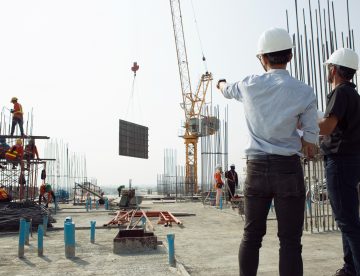
For any construction project, the position of Site Manager (sometimes referred to as Project Manager) is one of the most important. Whoever takes on this role must oversee the day-to-day management of on-site operations from start to finish (including pre-planning) and ensure all tasks are carried out with a focus on three key things – meeting timescales, keeping within budget and performing to the expected quality standards.
There’s no doubting that being a Site Manager is challenging but, as with many job roles, when some thought and time is given to being more effective, things can become easier and more enjoyable. If you’re wondering how to do this, read our blog for our top five tips.

From April 2022, a new app is set to make the process of checking CSCS skills cards at construction sites a lot simpler, improving site safety and tackling fraud in the process.
At the moment, different trades are signed up to 38 different card schemes which display the CSCS logo. This can lead to all kinds of complications when checking documentation and potentially to workers taking on roles they’re not suitably qualified/ trained for.
The CSCS Smart Check app is being developed as a solution that will allow all 2.1 million cards in the construction industry to be electronically verified quickly and easily in a single place. Keep reading…
Like most construction companies, there are times when our work involves dealing with and temporarily storing hazardous waste on site. If we were to do this poorly, it would have the potential to cause damage to both the environment and the local community (especially if it was allowed to contaminate surface water or groundwater supplies).
The good news is that we take our responsibilities seriously and follow strict procedures that comply with UK legislation and ensure no such damage comes about. As this is such an important topic, we’ve put together this quick guide to hazardous waste so that people know exactly what they should/ shouldn’t be doing.